Why Mapping Invisible Labor Will Change the Way You Partner and Parent
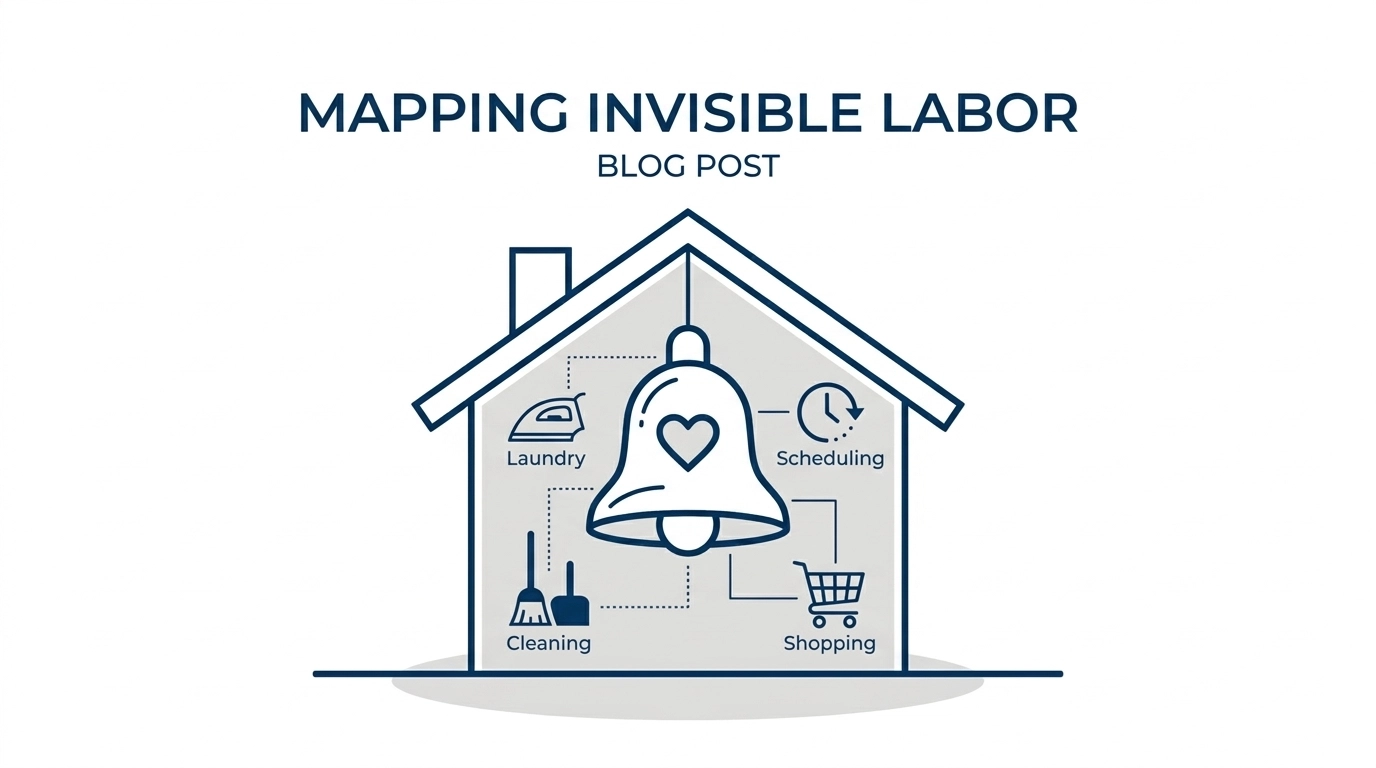
In many households, the most exhausting work is not the work that is seen. It is the work that is felt. It is the mental list of which child needs new shoes, the anticipation of a grocery shortage before the milk carton is empty, and the coordination of a weekend schedule that keeps everyone’s commitments from colliding. This is invisible labor: the cognitive and emotional management of a home.
When invisible labor remains unmapped, it leads to a predictable cycle of vague expectations, resentment, and eventual burnout. Without a shared system of record, household management relies entirely on willpower and memory. This is unsustainable. At Mavaro Systems, we view the home not just as a place of residence, but as a complex operating environment that requires a functional operating layer to thrive.
By shifting from a state of internal tracking to visible external systems, you move the burden of management from your mind to shared scaffolding. This transition is what we call moving from chaos to clarity.
The Two Dimensions of the Mental Load
To map invisible labor, we must first define its components. Most families focus only on execution, the act of doing the dishes or driving to soccer practice. However, execution is only the final step of a much larger cognitive process.
1. The Cognitive Dimension
This involves the planning, tracking, and decision-making required for a household to function.
- Anticipation: Knowing that school spirit day is next Tuesday
- Information management: Keeping track of where the spare keys are
- Decision making: Choosing which detergent is safest for a baby’s skin
2. The Emotional Dimension
This involves the management of the family’s internal state.
- Holding space: Managing a toddler’s tantrum while tracking your own regulation
- Translation: Explaining a child’s needs to a partner or teacher
- Monitoring: Sensing when a partner is nearing their limit
When these dimensions are not mapped, one partner typically becomes the project manager while the other becomes the helper. This dynamic creates friction on both sides.
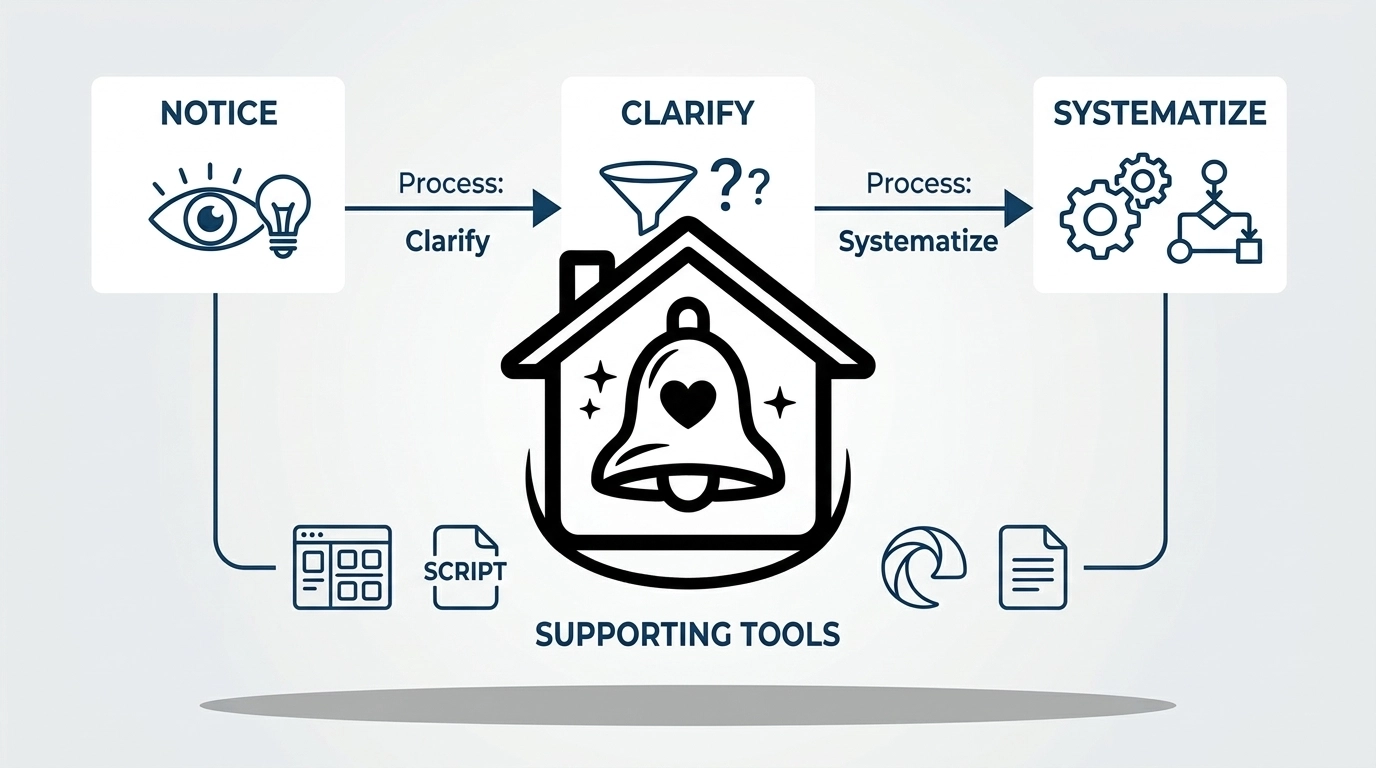
The Mavaro Behavioral OS: Notice -> Clarify -> Systematize
Mapping invisible labor requires systematic logic. We use a three-step framework within the Mavaro Behavioral OS to move labor from invisible to trackable.
Step 1: Notice
The first step is a neutral audit. It is the process of identifying everything currently held in the mind.
- The philosophy: If it requires a thought, it is a task.
- The current reality: Most households only notice labor when it fails.
Step 2: Clarify
Once a task or responsibility is noticed, it must be clarified. This is where we define ownership. In HausFlow, we move away from help and toward primary ownership. The owner is responsible for the full lifecycle of the task.
Step 3: Systematize
The final step is moving the clarified task into a Harmony Flow. By creating recurring routines and visible assignments, the system becomes the referee. The person who needs the shoes no longer has to remind their partner. The system provides the prompt.
Fairness Snapshots: Turning Resentment into Data
One of the greatest sources of friction in a partnership is the feeling of parity, or the lack of it. Without data, discussions about workload are based on feelings, which are often shaped by the stress of the moment.
HausFlow introduces the Fairness Snapshot. This is a neutral, data-driven view of the household workload. It does not exist to assign blame. It exists to provide a mirror.

When you can see that one partner is carrying most of the cognitive load while the other is handling a smaller part of the execution load, you can have a pragmatic conversation about balance.
The goal of parity:
- Visibility: Ensuring invisible tasks are weighted alongside visible ones
- Neutral accountability: The app tracks completion and follow-through
- Workload balance: Adjusting assignments based on current season of life
Moving Toward Sustainable Follow-Through
A system is only as good as its ability to recover. In the calm-tech philosophy, we acknowledge that life is messy. Kids get sick, work deadlines shift, and systems break.
The traditional approach relies on intensity and willpower. When the system fails, the people feel shame. HausFlow replaces this shame spiral with a Guided Reset.

A Household Reset is a brief, structured check-in. It allows partners to look at the previous week’s data, acknowledge where the rhythm was lost, and adjust the scaffolding for the week ahead. This focus on systems over willpower helps the home run as a steady rhythm rather than as a series of high-pressure sprints.
The Impact on Parenting
When parents map their invisible labor, they model healthy boundaries and organizational rigor for their children. By using the HausFlow Family tools, kids can see that a home does not just run. It is managed.
Implementation: How to Start Mapping Today
Moving from mental load to a visual system does not happen overnight. It requires commitment to implementation.
- The brain dump: Sit down with your partner and list every recurring thought you have about the home.
- Identify the ownership gap: Look at who is the noticer for each item.
- Define your Harmony Flows: Choose the top three sources of friction and build them into HausFlow.
- Trust the scaffolding: Once a task is in the system, the noticer has to step back and let the owner manage the lifecycle.
Summary: Progress Over Perfection
Mapping invisible labor is not about achieving a perfect, sterile home. It is about creating a steadier, more frictionless environment where every member of the household feels seen and supported.
By using a systems-first logic and the Mavaro Behavioral OS, you transition from the exhausting role of a solo manager to the sustainable role of a collaborative partner. Clarity is the antidote to resentment. Structure supports relationships.
For more guides on managing your household with calm and clarity, explore our full documentation and blog.