Beyond the Chore Chart: Teaching Real-Life Ownership and Responsibility

· 6 min read
HausFlow Editorial
Behavioral Systems Writer

A vibrant, high-fidelity illustration of a modern family kitchen where a parent and children are using a tablet with the HausFlow UI to coordinate their day.

For most families, the traditional chore chart is a fragile system. It usually starts with high energy: a colorful poster, a pack of star stickers, and a weekend of parental resolve. But within two weeks, the enthusiasm fades. The stickers remain unpeeled, the list becomes "invisible," and the parent is back to the familiar, exhausting rhythm of nagging: "Did you brush your teeth? Did you feed the dog? Why is your bag still in the hallway?"

This cycle occurs because most chore charts are designed for compliance, not ownership.

At Mavaro Systems, we believe the goal of household coordination isn't just to get the floor swept; it is to build a system where every member of the family understands their role and feels the agency to fulfill it. As we approach the 80% completion mark for the HausFlow Family Android and iOS apps, we are focusing on moving beyond simple checklists to create a "behavioral operating layer" for the home.

Turning Housework into a Team Sport with Points and XP

· 7 min read
HausFlow Editorial
Behavioral Systems Writer

A family interacting with a game-like chore interface, earning XP and points in a vibrant, calm-tech living room environment.

Household management is traditionally framed as a series of obligations. For most families, this translates into a cycle of nagging, resistance, and eventual friction. At Mavaro Systems, we view the home not as a list of chores, but as a collaborative environment that requires a functional operating layer.

As we reach the 80% completion mark for the HausFlow Family app on Android and iOS, we are shifting the focus from simple "task tracking" to a more robust, systems-first approach: turning housework into a team sport.

By implementing mechanics like Experience Points (XP), the Family Board™, and "Handled It™" submissions, HausFlow moves families away from the "Boss vs. Employee" dynamic and toward a shared rhythm of contribution.

Invisible Labor No More: A Guide to Balancing Your Fair Household Workload

· 6 min read
HausFlow Editorial
Behavioral Systems Writer

heroImage

Household management is often perceived as a collection of physical tasks: washing dishes, vacuuming floors, or taking out the trash. However, the most exhausting part of maintaining a home is the work that cannot be seen. This is invisible labor at home: the cognitive and emotional burden of anticipating needs, planning schedules, and monitoring the overall state of the household.

When this labor is unacknowledged, it creates a mental load that typically falls disproportionately on one person. The result is not just a messy house, but a fractured relationship defined by resentment, friction, and shame spirals when tasks are inevitably missed.

At Mavaro Systems, we view the home not just as a place to live, but as an environment requiring a functional Mavaro Systems Behavioral OS. By implementing an operating layer that makes the invisible visible, families and roommates can transition from chaotic reactive states to a steadier, more sustainable rhythm.

Why Calm Prompts Beat Constant Reminders Every Time

· 7 min read
HausFlow Editorial
Behavioral Systems Writer

A vibrant, high-fidelity illustration of a peaceful family dashboard in a sunlit living room.

Most household management apps are built on a foundation of "nagging." They are designed to beep, buzz, and banner-drop until you: or your family members: submit to the task at hand. The logic is simple: if we make the notification annoying enough, the person will eventually do the chore just to make the noise stop.

At Mavaro Systems, we believe this approach is fundamentally broken. It relies on intensity and willpower, two resources that are in short supply at the end of a long day. More importantly, it creates a "shame spiral." When you see a red badge or a "Late" tag, your brain doesn't think, "I should handle that." It thinks, "I've failed," or "I'm being hounded."

This is why we've built HausFlow around the concept of Calm Prompts. As we move toward 100% completion: with the Android and iOS apps currently 80% done: we want to share the philosophy behind this shift and why it's the only sustainable way to manage a shared home.

The Visual Family Calendar: Why Per-Kid Color Coding Actually Works

· 7 min read
HausFlow Editorial
Behavioral Systems Writer

A vibrant, high-fidelity illustration of a digital family calendar interface with color-coded event blocks and dots.

Managing a modern household is often less about the physical labor and more about the management of information. Between soccer practices, music lessons, chore rotations, and "Handled It™" moments, the mental load of keeping a family synchronized is immense. This is what we call "invisible labor": the constant cognitive processing required to ensure everyone is where they need to be, doing what they need to do.

At Mavaro Systems, we recognize that the primary friction in most homes isn't a lack of willingness to help; it's a lack of clarity. When expectations are buried in a group text or a cluttered spreadsheet, the system fails because the human brain cannot process the data quickly enough to act on it.

As we reach the 80% completion mark for the HausFlow Family apps on Android and iOS, we have focused heavily on the Visual Family Calendar. Specifically, we have implemented a per-kid color-coding system that serves as a visual scaffolding for the entire household. This isn't just about aesthetics: it's about building a sustainable operating layer for your life.

The Death of the Digital Nag: Why Supportive Systems Beat Pressure in Household Management

· 6 min read
HausFlow Editorial
Behavioral Systems Writer

heroImage

Life at home is rarely a linear sequence of events. It is a complex, overlapping web of domestic logistics: grocery replenishment, extracurricular coordination, laundry cycles, and the persistent question of "what’s for dinner?"

For many, the solution has been to turn to technology. However, most household management apps today act as digital nags. They are built on a foundation of high-pressure notifications, shame-inducing red badges, and a reliance on the user's raw willpower to just get it done.

At HausFlow, we believe this approach is fundamentally flawed. By forcing a high-energy optimization mindset onto the home, these apps often add to the very mental load they claim to solve. Built on the Mavaro Systems Behavioral OS, HausFlow is designed to be a calm, supportive operating layer: a system that prioritizes structural consistency over intense willpower.

From the Kitchen to the Boardroom: Why Your Home and Business Need the Same Operating System

· 5 min read
HausFlow Editorial
Behavioral Systems Writer

From the Kitchen to the Boardroom

For too long, we have treated our personal lives and our professional lives as two distinct biological states. We assume that the high-stakes coordination of a corporate boardroom requires a "system," while the daily management of a household can be sustained by sheer willpower and a few sticky notes.

The reality is that human behavior does not change just because the setting does. Whether you are managing a Fortune 500 team or a household of four, the underlying friction is the same: invisible labor, vague expectations, and the inevitable "shame spiral" that occurs when willpower fails.

At Mavaro Systems, we believe that life: all of it: requires a reliable operating layer. This is why we built the Mavaro Behavioral OS, the foundational logic behind HausFlow today and future coordination layers on our roadmap.

Harmony Flows: How to Stop Nagging and Start Managing Your Family Like a Pro

· 8 min read

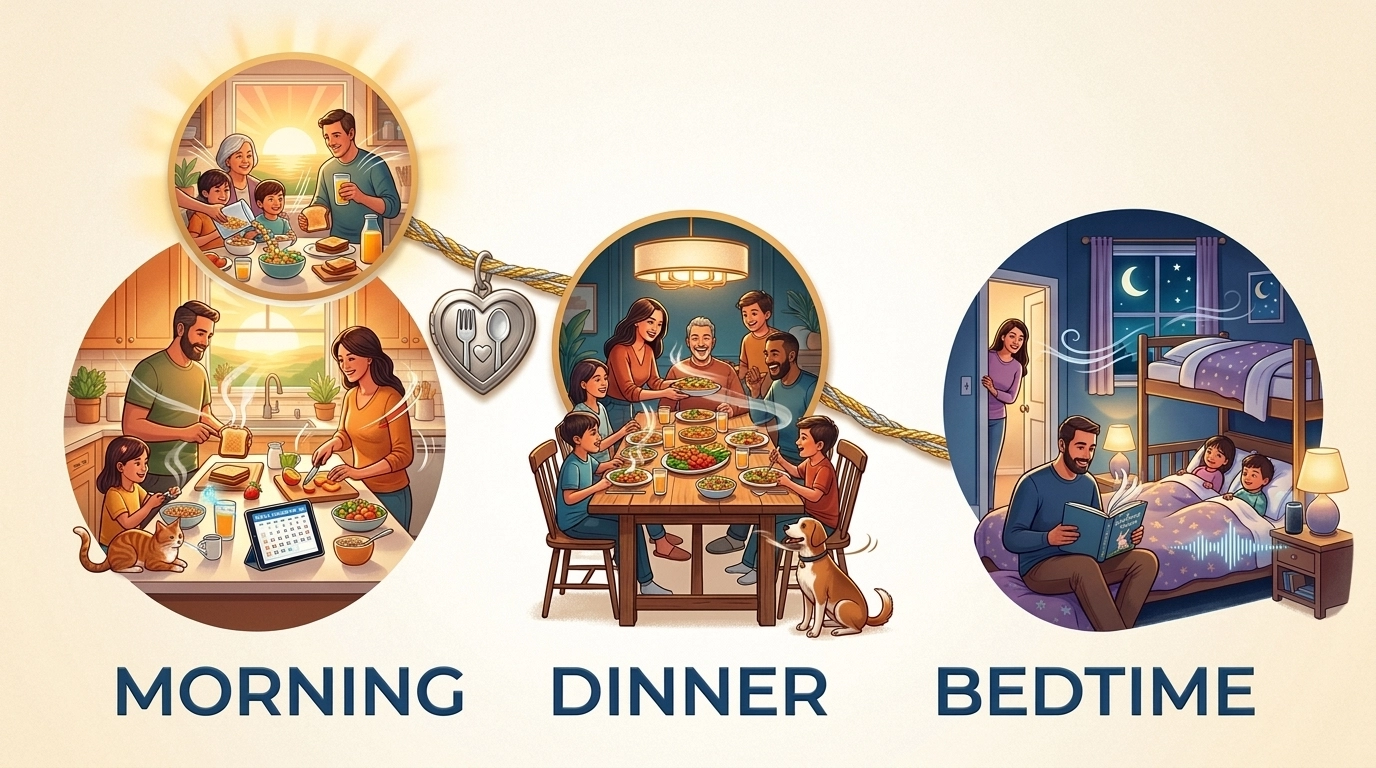
Hero Image: A vibrant, high-fidelity, dynamic illustration of a systematic daily family routine

Most parents eventually realize they have inherited a job title they never applied for: Chief Nagging Officer.

It is a role characterized by high-frequency verbal reminders, escalating volume levels, and a near-constant state of frustration. In this model, the parent acts as the central processor for every household task. You are the one who remembers the cleats, the one who tracks the toothbrushing, and the one who ultimately burns out because you are carrying the entire mental load of the family.

This is not a failure of parenting; it is a failure of architecture.

At Mavaro Systems, we view the home as a complex environment that requires a stable operating layer to function. When you rely on nagging, you are relying on intensity and willpower: two resources that are famously finite. To move from chaos to clarity, you need a system that supports human behavior rather than straining it.

We call this framework the Mavaro Systems - Behavioral OS. And within that system, the most powerful tool for families is the Harmony Flow.

10 Reasons Your Shared Chore Tracker Isn’t Working (And How a Reset Loop Fixes It)

· 7 min read

A vibrant, high-fidelity illustration of a household rhythm loop that recovers and resets

Most household management systems fail not because of a lack of effort, but because of a lack of infrastructure. Whether you are a parent managing a family or a roommate in a shared apartment, the traditional "chore chart" often creates more friction than it solves. It relies on high-intensity willpower rather than a sustainable rhythm.

At HausFlow, we view home management as an operating layer for your life. When that layer is poorly designed, it leads to shame spirals, resentment, and eventual system abandonment.

To fix your household, you must first identify why your current tracker is breaking. Here are the 10 structural reasons shared systems fail, and how a Review -> Reset loop provides the scaffolding needed for long-term success.

The Ultimate Guide to Choosing a Chore Chart for Adults in 2026: Systems Over Willpower

· 6 min read
HausFlow Editorial
Behavioral Systems Writer

heroImage

For most households, the struggle isn't a lack of effort. It is a lack of infrastructure.

In 2026, the traditional paper "chore chart for adults" has revealed its primary flaw: it relies almost entirely on willpower. When willpower fluctuates: due to work stress, illness, or general burnout: the system collapses. This collapse often leads to a "shame spiral," where unfinished tasks create resentment, and the mental load of tracking who did what becomes a second job in itself.

At Mavaro Systems, we view household management not as a series of chores to be finished, but as an operating layer for your life. We don't believe in more discipline; we believe in better scaffolding.

Do Kids Do Better With Chosen or Assigned Chores?

· 3 min read
HausFlow Editorial
Behavioral Systems Writer

Parents often ask a practical question with a big psychological impact: should kids choose their chores, or should adults assign them? The evidence points to a balanced answer. Assigned chores help children build responsibility and frustration tolerance, while chosen chores improve motivation, ownership, and follow-through.

The strongest approach for most families is a hybrid system: clear non-negotiable responsibilities plus meaningful choice.

Setting Up for Success: Your First 5 Minutes in the HausFlow App

· 6 min read
HausFlow Editorial
Behavioral Systems Writer

A family collaborating on their household dashboard using the HausFlow app

The transition from a chaotic household to a coordinated one does not require a sudden burst of willpower. It requires a better operating layer. At Mavaro Systems, we believe that the friction most families feel: the nagging, the forgotten chores, and the "invisible labor": is a system failure, not a character flaw.

With the HausFlow Family app now 80% complete, we have optimized the onboarding experience to be as frictionless as possible. You don't need a weekend to set this up. You need five minutes. This guide walks you through the initial implementation of the Mavaro Systems Behavioral OS in your home, moving you from vague expectations to a steady rhythm of follow-through.