Why We Built "Recall Submission": Giving Kids the Tools to Self-Correct

· 6 min read

HausFlow Editorial
Behavioral Systems Writer

A child using the HausFlow Kid Shell on a tablet, featuring a calm Recall Submission button

At Mavaro Systems, we are currently 80% through the development of the HausFlow Family mobile apps for Android and iOS. As we move closer to a full release, our focus has sharpened on a specific type of friction that exists in every household: the gap between "I'm done" and "It's actually finished."

In most chore-tracking systems, this gap is filled by the parent. The kid finishes a task, the parent inspects it, finds a mistake, and the "nagging loop" begins. We built HausFlow to break that loop. One of the most critical tools in this effort is a feature we call Recall Submission.

No-Shame Design: How HausFlow Replaces Nagging with Neutral Accountability

· 7 min read
HausFlow Editorial
Behavioral Systems Writer

A vibrant illustration of a modern home with a digital operating layer showing task icons and clear ownership systems.

In many households, the "operating system" for getting things done isn't a system at all: it's a person. Usually, this person is the one who notices when the trash is overflowing, the one who tracks the kid's soccer schedule, and the one who eventually, out of pure exhaustion, has to ask someone else to help.

We call this "nagging," but that's a loaded term. In reality, it is the predictable byproduct of a home that lacks a visible coordination layer. When expectations are vague and ownership is invisible, the only way things get done is through constant person-to-person friction. This leads to what we call the Shame Spiral: the person reminding feels like a parent to their partner, and the person being reminded feels criticized, controlled, or inadequate.

At Mavaro Systems, we believe the solution isn't to "communicate better" or "try harder." The solution is to move the accountability out of the relationship and into a neutral system. We call this No-Shame Design.

Why Mapping Invisible Labor Will Change the Way You Partner and Parent

· 6 min read

heroImage

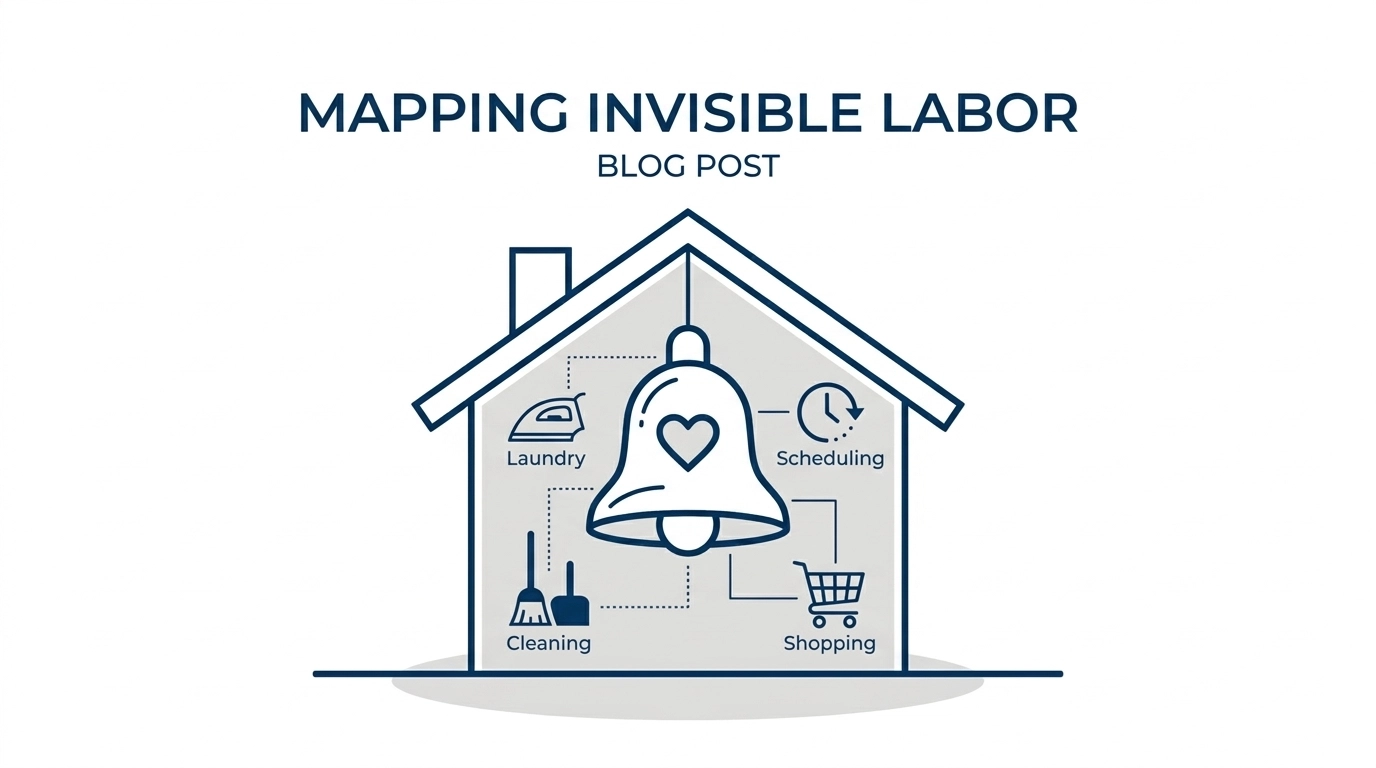
In many households, the most exhausting work is not the work that is seen. It is the work that is felt. It is the mental list of which child needs new shoes, the anticipation of a grocery shortage before the milk carton is empty, and the coordination of a weekend schedule that keeps everyone’s commitments from colliding. This is invisible labor: the cognitive and emotional management of a home.

When invisible labor remains unmapped, it leads to a predictable cycle of vague expectations, resentment, and eventual burnout. Without a shared system of record, household management relies entirely on willpower and memory. This is unsustainable. At Mavaro Systems, we view the home not just as a place of residence, but as a complex operating environment that requires a functional operating layer to thrive.

By shifting from a state of internal tracking to visible external systems, you move the burden of management from your mind to shared scaffolding. This transition is what we call moving from chaos to clarity.

From Chaos to Clarity: Using the Behavioral OS to Share Household Duties Without the Drama

· 11 min read

heroImage

Most household management systems fail because they rely on the one thing humans are notoriously bad at maintaining: intensity.

We approach chores with a burst of willpower. We buy a new whiteboard, color-code a calendar, or spend a Sunday afternoon "getting organized." By Wednesday, the board is blank, the calendar is outdated, and the resentment is back. This is the intensity trap. It is an attempt to solve a structural problem with a psychological state.

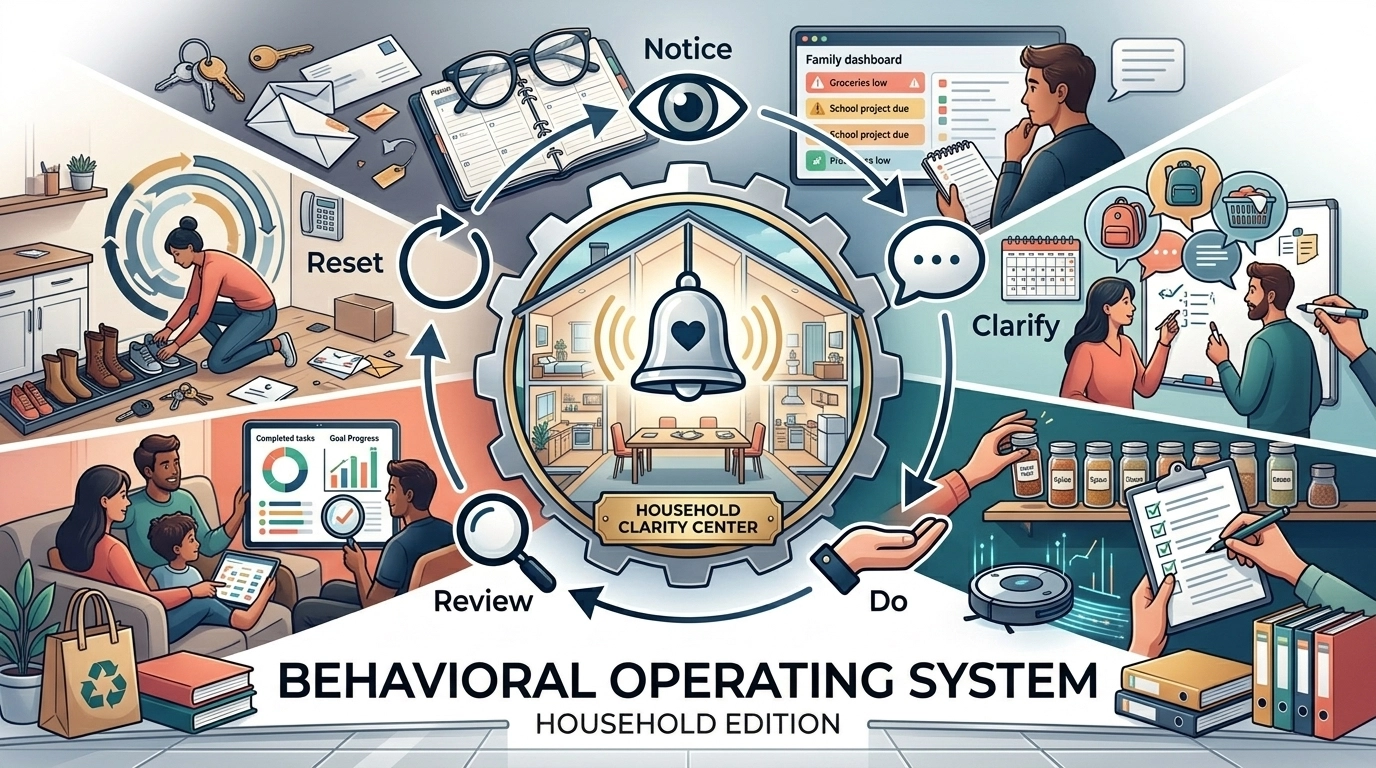
At HausFlow, we view the household not as a collection of people who need to try harder, but as a system that needs a more reliable operating layer. We call this the Mavaro Systems - Behavioral OS.

By shifting from willpower to a system-first logic, you can move away from the drama of "Who forgot what?" and toward the clarity of "How does the system work?"

Shared Coordination: Why HausFlow is a System, Not Just a List

· 6 min read
HausFlow Editorial
Behavioral Systems Writer

A vibrant, high-fidelity illustration of a modern family home where the facade is partially translucent, revealing glowing, interconnected gears and rhythmic flow lines behind the walls. These gears represent a household 'operating system.' The atmosphere is calm and harmonious.

Most household management starts with a list. A grocery list on the fridge, a scribbled chore chart in the hallway, or a shared note on a smartphone. We assume that if we just write the tasks down, the work will get done.

But for most families, the list is where the friction begins, not where it ends.

The list is a reactive tool. It requires someone, usually a parent, to act as the "Project Manager," constantly updating, reminding, and auditing. This creates a "willpower debt" where the system only works as long as one person has the energy to push it forward.

At Mavaro Systems, we believe that for home coordination to be sustainable, it has to move beyond the static list. It needs to become an operating layer for your life. That is the core philosophy behind HausFlow: a system designed for shared coordination, not just task tracking.

The "Handled It™" Revolution: Rewarding Initiative, Not Just Compliance

· 8 min read
HausFlow Editorial
Behavioral Systems Writer

A child taking initiative in a calm, modern home with a HausFlow Handled It badge and the HausFlow Family Edition logo

Most modern households operate on a "Compliance Model." In this framework, the parent acts as the central processor: the one who notices the mess, calculates the timing, and issues the command. The child, in turn, acts as the executor. They wait for the prompt, perform the task (often with varying levels of friction), and wait for the next instruction.

This cycle is exhausting for parents and limiting for children. It keeps the mental load firmly on the shoulders of one person and trains the other to be passive. At Mavaro Systems, we recognize that true household harmony doesn't come from better nagging; it comes from a more intelligent operating layer.

That is why we built the Handled It™ feature. It is a fundamental shift from rewarding obedience to rewarding initiative.

Invisible Labor at Home: Turning Mental Load into a Shared Chore Tracker for Adults

· 7 min read
HausFlow Editorial
Behavioral Systems Writer

A vibrant illustration representing the transition from household chaos to calm flow

Most household friction doesn't stem from a lack of care; it stems from a lack of visibility. When we talk about invisible labor at home, we aren't just talking about who washed the dishes or who took out the trash. We are talking about the cognitive and emotional effort required to notice the trash is full, remember the pickup schedule, ensure there are fresh liners in the cabinet, and coordinate the effort.

This is the mental load: the constant background processing that keeps a household running. For many families and roommates, this load is unequally distributed, leading to a shame spiral of forgotten tasks and resentment. A basic chore chart for adults can help surface some of that work, but it often breaks down when ownership is vague or routines change. A calmer solution is a family organization app that turns invisible labor at home into visible, shared follow-through.

At HausFlow, we view the home not as a series of chores, but as a system that requires a functional operating layer. By applying the principles of the Mavaro Behavioral OS, we can move away from vague expectations and toward a steadier, more sustainable rhythm with a shared chore tracker that supports daily life.

From Chaos to Calm: A Guide to the HausFlow User Success Journey

· 6 min read
HausFlow Editorial
Behavioral Systems Writer

A family household transitioning from chaos to calm with the HausFlow Family Board

Managing a modern household often feels less like living and more like managing a logistics firm without any of the professional software. We call this the "Chaos State": a cycle of vague expectations, invisible labor, and the friction that inevitably arises when a system relies entirely on willpower rather than structure.

At Mavaro Systems, we believe your home deserves an operating layer that supports human behavior instead of fighting it. HausFlow isn't just a "chore app"; it is a shared coordination platform built on the Mavaro Systems Behavioral OS. With our Android and iOS apps now 80% complete, we are ready to walk you through the ideal user success journey: from the initial implementation of the system to a state of sustainable household harmony.

The Best Chore App for Couples: Why Fairness Is Better Than a Checklist

· 7 min read
HausFlow Editorial
Behavioral Systems Writer

A vibrant, high-fidelity illustration of a modern couple in a light-filled living room, interacting with a calm, digital household management hub.

For many couples, the division of household labor is less about a lack of effort and more about a lack of visibility. We often mistake a long to-do list for a solution, only to find that the list itself becomes a secondary source of stress. When one person is the "manager" and the other is the "helper," the resulting friction isn't just about the dishes: it’s about the mental load.

To build a sustainable household, we must move beyond the simple checklist. The most effective chore app for couples isn't just a digital version of a paper list; it is an operating layer that prioritizes fairness, clarity, and rhythm.

At HausFlow, we’ve built a framework designed to move partners from chaos to clarity. This isn't about working harder; it’s about implementing a system that supports your relationship instead of straining it.

Points vs. Power Struggles: Building Healthy Habit Loops for Kids

· 6 min read
HausFlow Editorial
Behavioral Systems Writer

HausFlow Kid Shell and Rewards System

Household management often devolves into a test of wills. For many families, the daily routine is a series of friction points: "Did you brush your teeth?" "Is your room clean?" "Why is the dishwasher still full?" This cycle creates a high-pressure environment where parents are forced into the role of a "nag" and children adopt a stance of resistance.

At Mavaro Systems, we view this not as a personal failure of parenting or a lack of discipline in children, but as a failure of the underlying operating system. Most homes rely on Willpower-First logic, which is unsustainable and leads to emotional exhaustion.

To solve this, Mavaro Systems Behavioral OS introduces a Systems-First framework within HausFlow. By replacing vague expectations with visible ownership and healthy habit loops, we move from power struggles to a steady, predictable rhythm.

Gamifying the Garbage: Raising Accountable Kids with HausFlow XP and Rewards

· 6 min read

Raising Accountable Kids with HausFlow XP and Rewards

Managing a household with children often devolves into a cycle of willpower battles. Parents rely on reminders, which escalate into nagging, and eventually culminate in frustration when tasks remain incomplete. This approach is biologically taxing. It requires high intensity from the parent to drive action from the child.

At Mavaro Systems LLC, we view the home not as a series of chores, but as a system of human behaviors. To move from chaos to clarity, we must transition away from willpower-based parenting and toward a structured operating layer.

HausFlow Family is built on the Mavaro Systems - Behavioral OS. This framework replaces friction with rhythm, using gamification not as a distraction, but as scaffolding for accountability. By utilizing Experience Points (XP), proof verification, and the Review -> Reset cycle, we can raise kids who understand the mechanics of contribution without the emotional drama.

Instant Clarity: The Power of Real-Time Notifications in a Busy House

· 7 min read
HausFlow Editorial
Behavioral Systems Writer

A vibrant illustration of a modern family home with a calm notification appearing on a device, representing instant clarity and household coordination.

In many households, the primary source of friction isn't the work itself, but the uncertainty surrounding it. "Did you feed the dog?" "Is the dishwasher empty yet?" "When are you planning to take the trash out?" These questions, while seemingly small, create a persistent layer of mental noise. This constant checking and double-checking is a symptom of a missing operating layer: a system that provides a single source of truth for every member of the home.

At Mavaro Systems, we believe that coordination should be passive, not active. You shouldn't have to ask if a task is done; the system should tell you. With the HausFlow app now 80% complete on both Android and iOS, we are finalizing the implementation of a notification framework designed to move families from chaos to clarity.