Roommate Wars: Why Your Shared Spreadsheet is Failing (and How HausFlow Fixes It)
Shared living is often entered with high optimism and low infrastructure. We assume that because we are friends, or at least reasonable adults, the mechanics of a household, cleaning, supplies, administrative overhead, will naturally find an equilibrium.
When that equilibrium fails, the standard response is the Shared Spreadsheet. It feels like a professional solution. It has rows, columns, and checkboxes. It creates a temporary sense of order.
However, spreadsheets are static tools designed for data storage, not dynamic human behavior. They require high willpower to maintain, offer no proactive guidance, and often become a digital artifact of resentment rather than a tool for harmony. Within weeks, the Roommate War begins, not because people are inherently lazy, but because the system lacks the necessary scaffolding to support them.
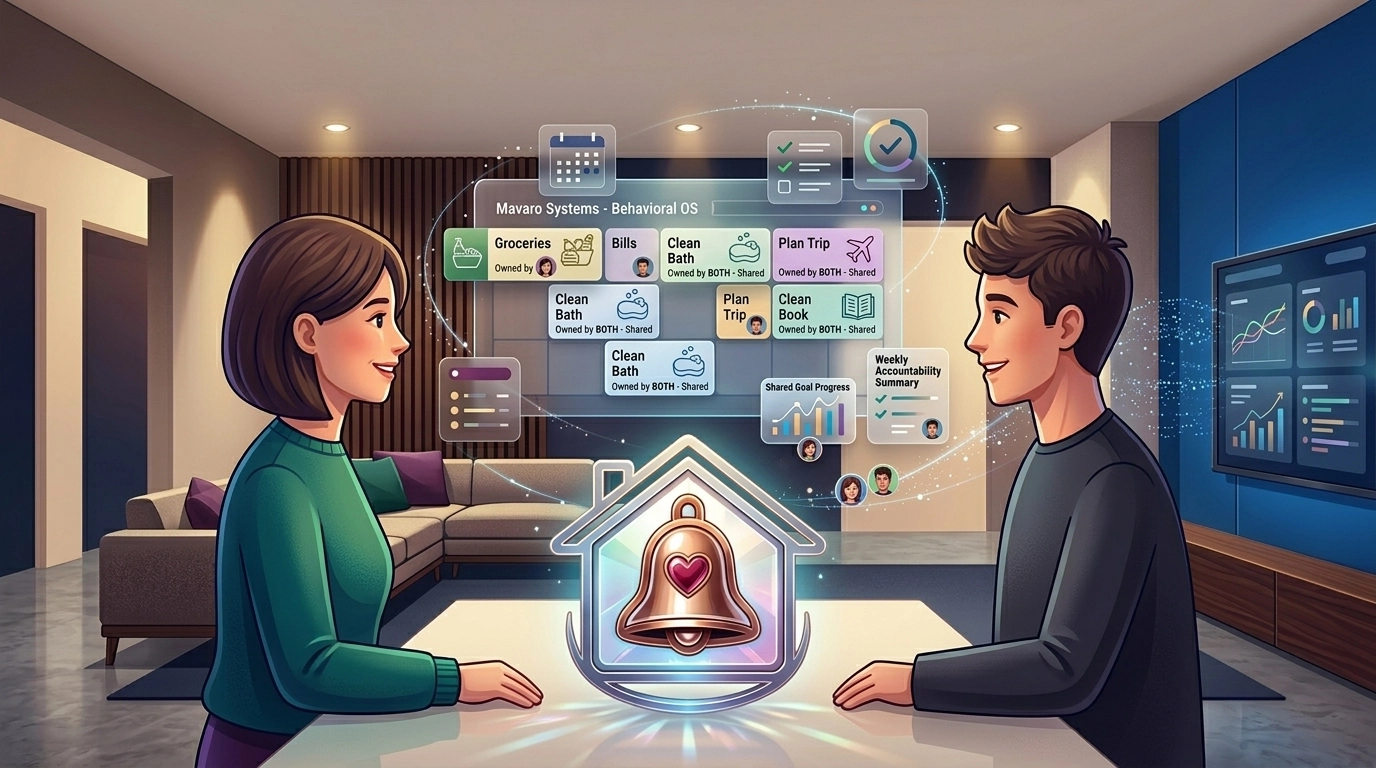
At Mavaro Systems, we view the household not as a collection of chores, but as a system that requires a reliable operating layer. This is where Mavaro Systems - Behavioral OS and the HausFlow platform provide a fundamental shift from friction to flow.
The Spreadsheet Mirage: Why Manual Tracking Fails
Most roommates eventually realize that their spreadsheet is dead. It remains pinned to the fridge or bookmarked in a browser, untouched for months. There are three primary reasons why manual tracking systems collapse:
1. The Maintenance Tax
A spreadsheet is a task in itself. To keep it accurate, someone must remember to open it, log the activity, and verify the data. This creates a secondary layer of invisible labor for the person who cares the most. When the system requires work to maintain the system, it is doomed to fail.
2. Lack of Contextual Visibility
Spreadsheets are out-of-sight, out-of-mind. They do not provide calm prompts or reminders at the moment action is needed. They rely entirely on a roommate's internal willpower to check the list, a resource that is finite and often depleted by the end of a workday.
3. The Shame Spiral
When a task is missed in a shared spreadsheet, it sits there as a red cell or an empty box. This often triggers a shame response in the offender and a resentment response in the observer. Without a neutral way to recover, the spreadsheet becomes a record of failure rather than a guide for progress.

The Mavaro Systems - Behavioral OS: A New Operating Layer
HausFlow is built on the Mavaro Systems - Behavioral OS. Instead of a passive list, it acts as a functional framework that sits over your shared living environment. It prioritizes structure that supports relationships rather than straining them.
By treating household management as an operating layer, HausFlow removes the need for constant negotiation. The system defines the what, when, and who, allowing roommates to focus on living.
Visible Ownership
In a spreadsheet, dishes is just a word. In HausFlow, dishes is assigned ownership. This clarity eliminates the "I thought you were doing it" friction. Ownership is visible, trackable, and neutral.
Sustainable Follow-Through
The goal is not 100 percent perfection on day one. The goal is a steadier rhythm. The Behavioral OS uses gentle recovery systems. If a task is missed, the system does not scream; it recalibrates. This calm-tech approach prevents the shame spirals that typically lead roommates to abandon their shared systems.
Fairness Snapshots: Data over Drama
One of the most common sources of roommate drama is the perception of imbalance. "I feel like I do everything" is a subjective statement that is difficult to argue with but also difficult to prove.
HausFlow introduces the Fairness Snapshot. This feature provides a neutral, data-backed view of the household workload balance.

Implementation of Parity
Instead of debating feelings during a heated confrontation, roommates can look at a Snapshot. It displays the distribution of tasks, time investment, and completion rates.
- Visibility: It makes invisible labor, like managing the grocery list or cleaning the lint trap, visible.
- Accountability: It shows who is carrying the load without needing a single word of accusation.
- Adjustment: It allows for workload balancing where tasks can be reassigned based on current reality, not just past expectations.
By moving the conversation from "You never help" to "The Snapshot shows a 70/30 split, how can we move toward parity?", the conflict is depersonalized and solved through system adjustment.
Handling That One Roommate Without Confrontation
We have all lived with that one roommate, the person who is well-meaning but consistently fails to follow through. In a spreadsheet-based house, this usually leads to The Talk, a high-pressure confrontation that often damages the friendship and only leads to temporary changes in behavior.
HausFlow solves this through Neutral Accountability.
Calm Prompts, Designed & Engaging Notifications, and Proof Verification
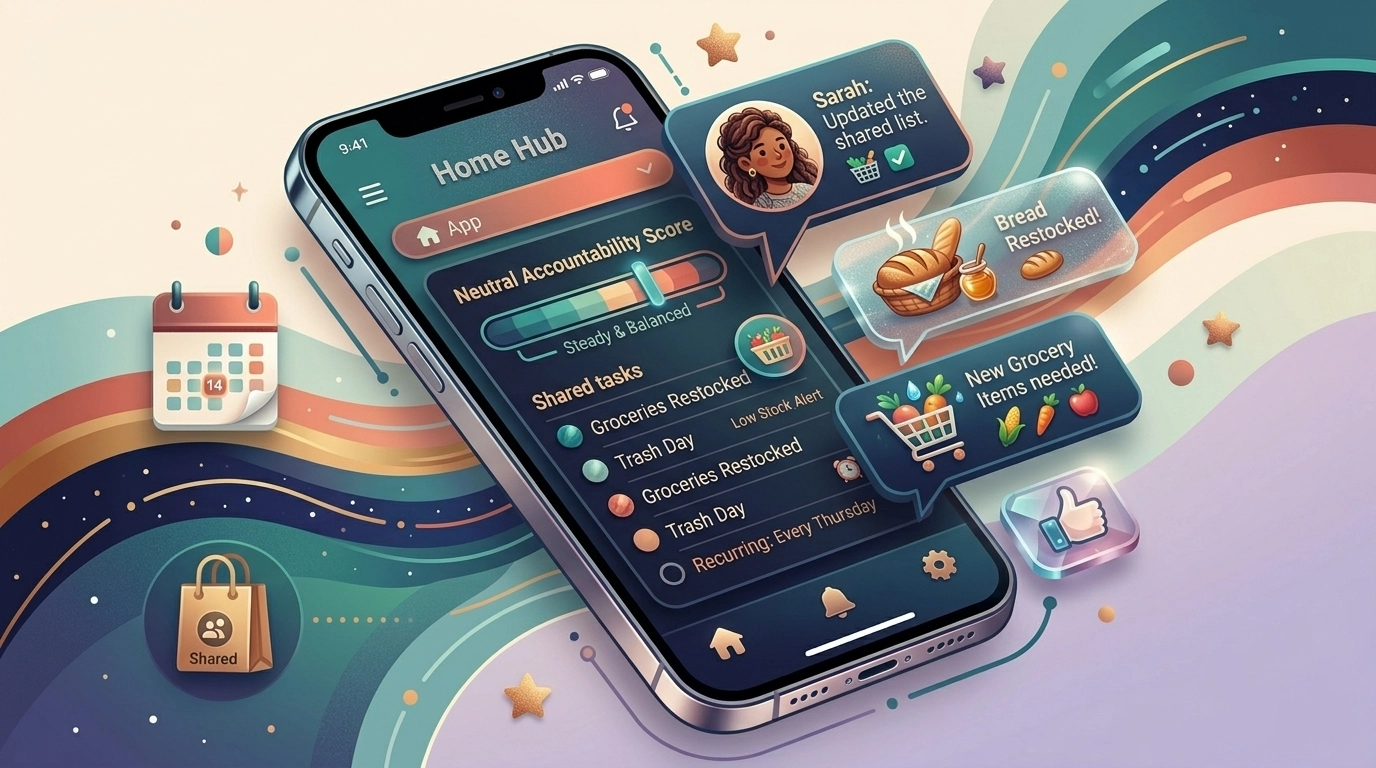
The system provides the nudge so you do not have to. Instead of a roommate saying "Hey, you forgot the trash again," the HausFlow app sends a calm, automated prompt. The accountability comes from the system, not a person.
HausFlow also supports Designed & Engaging Notifications that improve buy-in. The goal is not louder reminders. It is clearer, better-timed prompts that feel easier to respond to and easier to trust as part of the household rhythm.
For households that need a bit more rigor, the Proof Verification system allows for a completed task to include a photo or a simple confirmation. This provides the Done state that everyone can see, reducing the need for follow-up questions.
The XP and Rewards Framework
For roommates who struggle with motivation, the Behavioral OS utilizes a lightweight XP and rewards system. It turns the mundane maintenance of a home into trackable progression. While it sounds simple, the psychological shift from "I have to do this" to "I am checking this off the system" significantly lowers the barrier to entry for the less-organized roommate.
Harmony Flows: The Mechanics of Routine
Spreadsheets are static, but life is a series of recurring loops. HausFlow uses Harmony Flows to manage these rhythms. A Harmony Flow is more than a recurring task; it is a logic-based sequence of events.
The Kitchen Flow Logic:
DINNER ENDS -> DISHES LOADED -> COUNTERS WIPED -> DISHWASHER RUN -> MORNING RESET
By visualizing these flows, roommates understand how their individual tasks contribute to the overall scaffolding of the home. When one person breaks the flow, the system identifies the gap immediately, allowing for a quick, friction-less reset.
Implementation: Moving from Chaos to Clarity
Transitioning from a spreadsheet, or total chaos, to a systematic framework requires deliberate implementation. We recommend the following progression:
- The Infrastructure Audit: Sit down as a household and list the invisible labor that currently causes friction.
- Define Ownership: Use HausFlow to assign clear, visible ownership of these areas.
- Set the Rhythm: Establish Harmony Flows for recurring daily and weekly routines.
- The Weekly Reset: Use a guided check-in to review the Fairness Snapshot and adjust the system as needed.

Sustainable Progress Over Perfection
The Roommate War is rarely about the dishes themselves. It is about the erosion of trust and the feeling of being unsupported in one's own home.
Spreadsheets fail because they rely on the very thing roommates are often short on: willpower and perfect communication. HausFlow succeeds by providing a Mavaro Systems - Behavioral OS: a steady, reliable, and neutral framework that handles the logistics of shared living so you do not have to.
Stop fighting over the spreadsheet. Start building a system that works for everyone.
Ready to move from chaos to clarity? Explore the HausFlow Roommate landing page and the HausFlow documentation to see how to implement a steadier rhythm in your home today.